Water well drilling
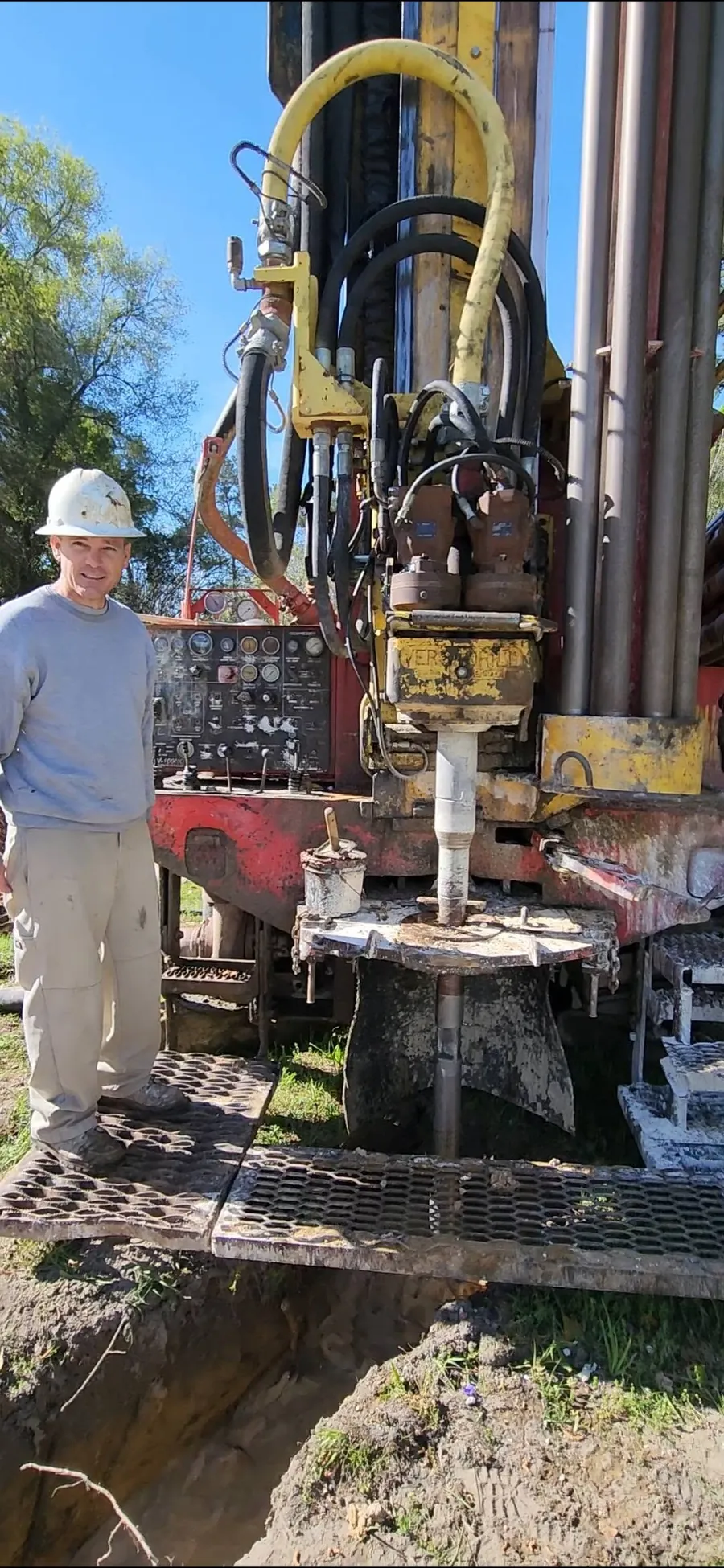
New residential and property wells drilled through south Georgia sand and clay into the water-bearing rock below.
Veteran Owned & Operated · Omega, Georgia
Water well drilling, well pump service and water filtration for Colquitt County and the surrounding counties, from a Georgia-licensed well contractor with over 50 years of combined experience between its officers.
What we do
From the first foot of a new well to the filter on the wall, it’s all the same water system, and we work on every part of it.
New residential and property wells drilled through south Georgia sand and clay into the water-bearing rock below.
No water, low pressure, a pump that won’t shut off: our service department diagnoses it and puts it right.
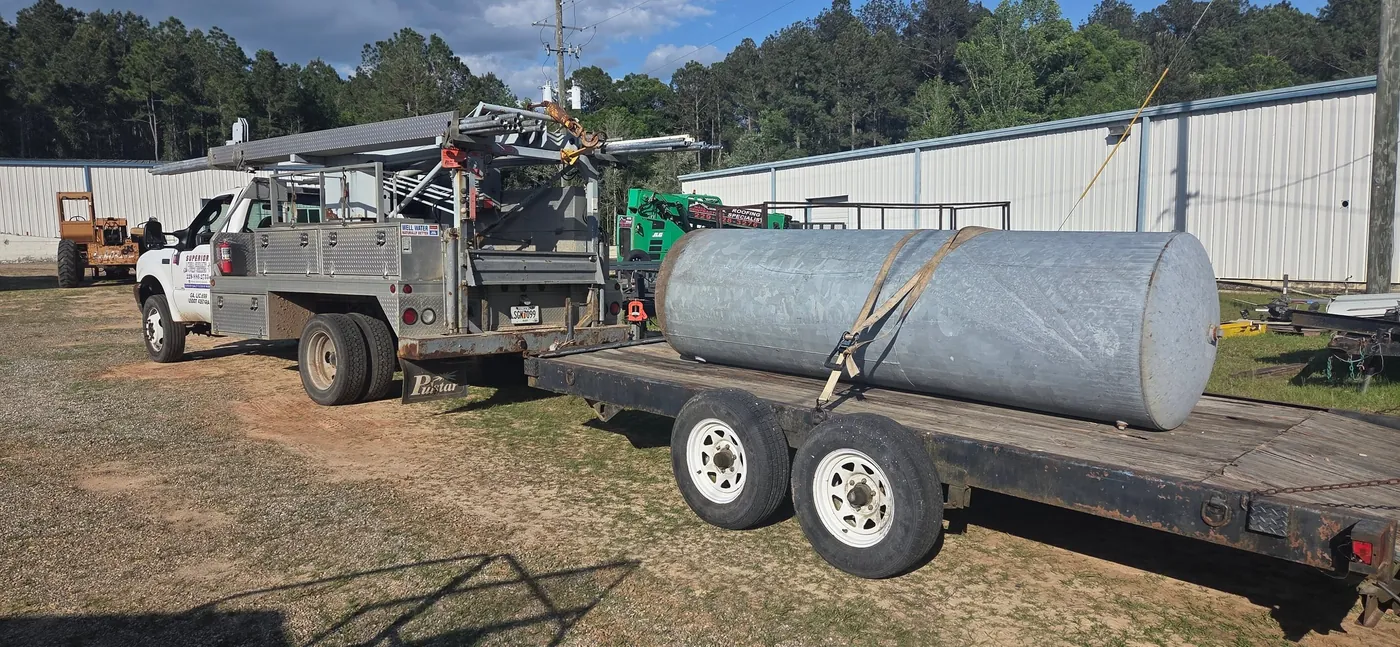
Tank change-outs, large and small, so the pump stops short-cycling and the pressure stays even.
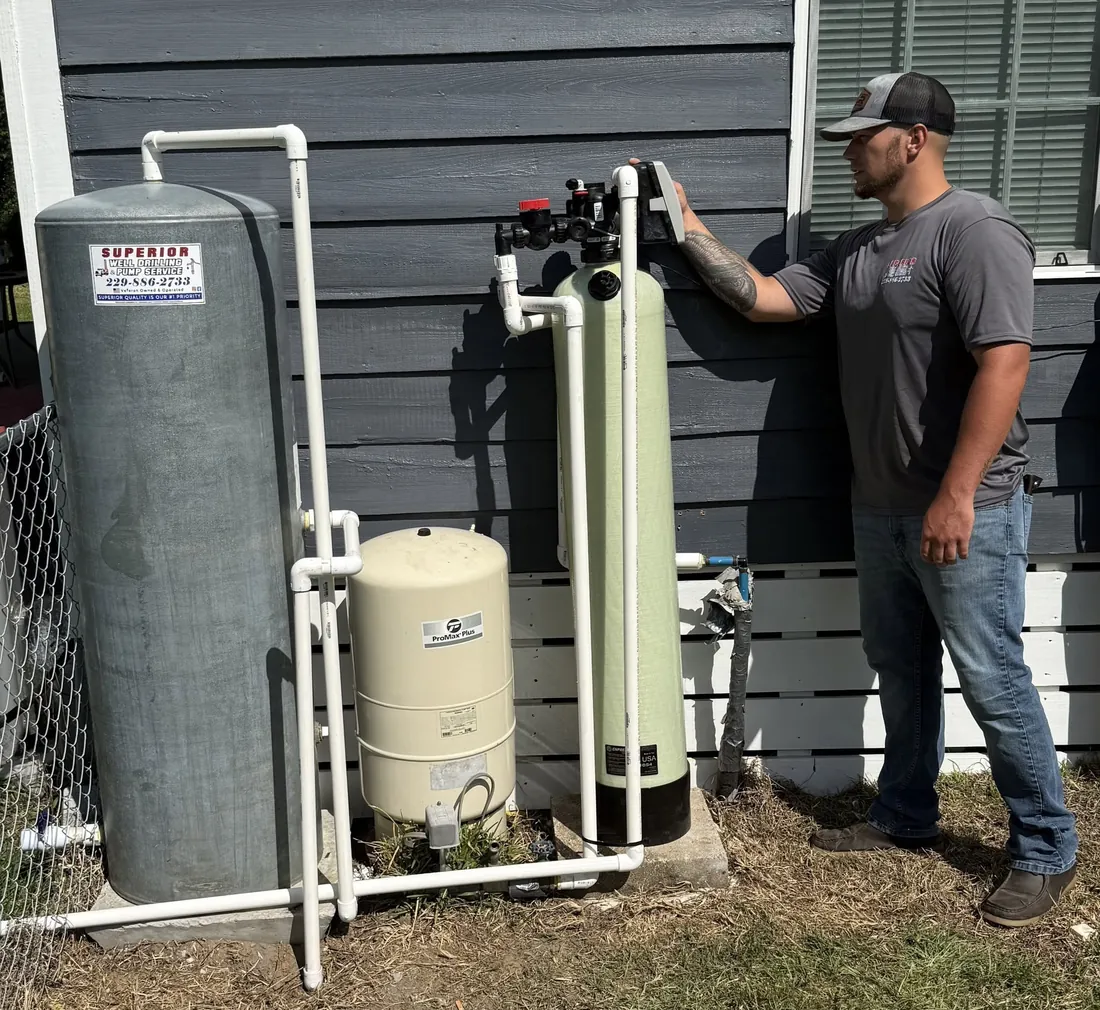
Sand, rust, iron and sulfur smell: filtration systems installed, programmed and serviced.
Small pumps and water setups for deer land, food plots, gardens, barns and camps.
A look at the whole system after a storm, a flood, a long outage or before you buy a property with a well.
In their words
“God is good!”
“We want to thank all who has helped us get to this point! … We have been blessed and have acquired more drilling work than we can handle with our work force and equipment.”
That April announcement went on: drilling was booked out for months, “BUT!!! WE ARE STILL FULL FORCE WITH OUR SERVICE DEPARTMENT so don't hesitate to call for repair and pump replacements.” Drilling and service run on separate schedules, so a broken pump doesn’t wait behind the rig.
Superior quality is our #1 priority
From the job log
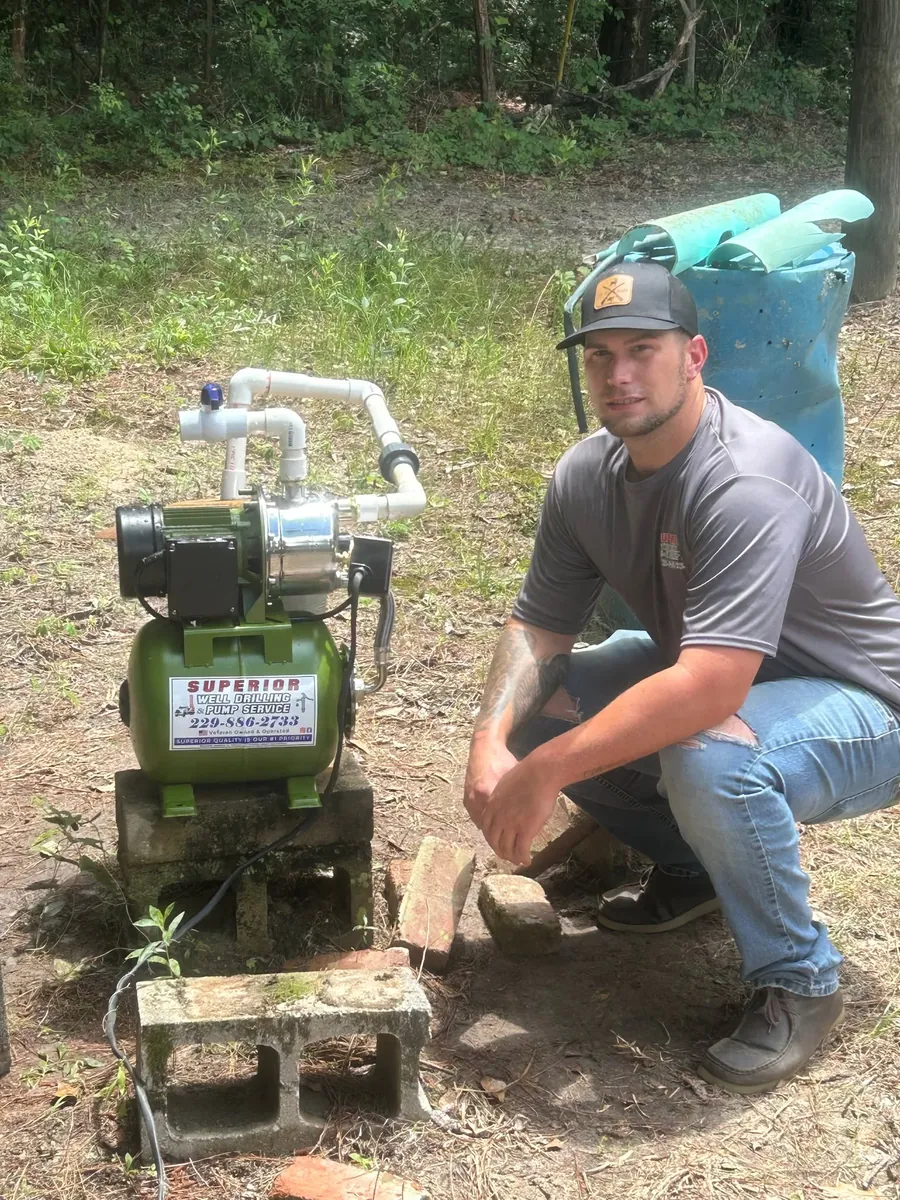
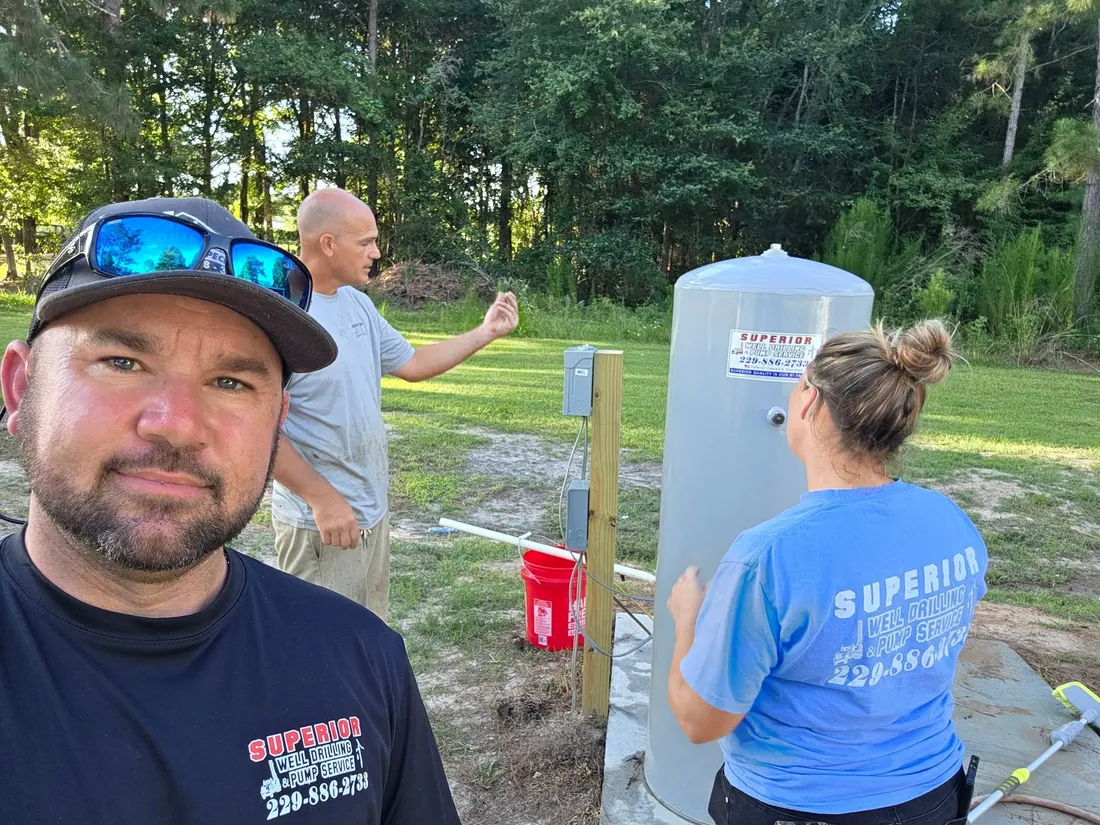
What’s under your yard
Across Colquitt and Tift counties, a household well is drilled down through sand and clay and finished in the limestone of the Upper Floridan aquifer, the same rock that supplies Moultrie’s city wells and the farm pivots around them.
That water is plentiful, but it isn’t always pretty. Iron is common: UGA Extension puts high iron and manganese in 15 to 20 percent of Georgia private wells. Some wells also carry hydrogen sulfide, the rotten-egg smell. Both can be treated once you know what’s in the water.
Sulfur, iron & sand answersService area
Superior Well Drilling works out of Omega, Georgia, on the Tift–Colquitt county line, covering Colquitt County and the surrounding counties.
Straight answers
Check the well pump’s breaker in your electrical panel. If it’s tripped, reset it once. If it trips again, leave it off and call (229) 886-2733: something in the pump, the wiring or the controls has failed.
A good submersible pump commonly lasts somewhere around 8 to 15 years, and sometimes longer. What shortens its life most is short cycling from a bad pressure tank, sand in the water, lightning, and running the well dry.
That smell is hydrogen sulfide gas. In wells, it’s usually produced by harmless bacteria living in low-oxygen groundwater. According to UGA Extension, most people can smell it at about 0.5 parts per million, and above 1 part per million it smells like rotten eggs and corrodes plumbing.
There isn’t one depth. Most household wells here are drilled through the sand and clay at the surface and finished in the top of the Upper Floridan limestone. Georgia’s geologic survey describes that sand-and-clay cover as anything from under 50 feet to several hundred feet thick, and it can change by tens of feet over a short distance.
Don’t drink it until it has been tested. Floodwater can carry sewage, bacteria and chemicals into a well. Use bottled water, and follow your county health department’s guidance.
In Georgia, water well contractors are licensed, and pump installers certified, by the Water Well Standards Advisory Council. Georgia EPD acts as the Council’s agent, issuing the licenses and keeping the public list of licensed contractors.
Hit water
Call Superior Well Drilling in Omega. Drilling books up months ahead; the service department takes repair calls all along.